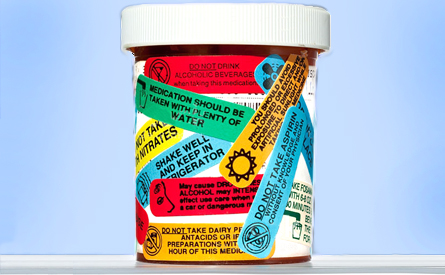
Medications & Older Adults

The 2012 American Geriatrics Society Updated Beers Criteria:
Medications that Older Adults Should Avoid or Use With Caution
For more than 20 years, the Beers Criteria for Potentially Inappropriate Medication Use in Older Adults has been the leading source of information about the safety of prescribing drugs for older people. To help prevent medication side effects and other drug-related problems in older adults, the American Geriatrics Society (AGS) has updated and expanded this important resource. The expanded AGS Updated Beers Criteria for Potentially Inappropriate Medication Use in Older Adults identifies medications with risks that may be greater than their benefits for people 65 and older.
Why Experts Developed the Beers Criteria
As you get older, your body changes. These changes can increase the chances that you’ll have side effects when you take medications. Older people usually have more health problems and take more medications than younger people. Because of this, they are also more likely to experience dangerous drug-drug interactions. Every year, one in three adults 65 or older has one or more adverse (harmful) reactions to a medication or medications. This is why it’s important for researchers to identify and help reduce use of drugs that are associated with more risks than benefits in older people.
The Beers Criteria was last updated in 2003. The criteria need to be updated regularly because new drugs continue to be marketed and new studies continue to provide information on the safety of existing medications. In 2011, the criteria was updated by the American Geriatrics Society using a panel of healthcare and pharmacy experts. The AGS will continue to update the criteria on a regular basis.
The updated 2012 AGS Beers Criteria is published in the Journal of the American Geriatrics Society. It is available online at www.americangeriatrics.org.
Using a time-tested method for developing care guidelines, and following the recommendations of the Institute of Medicine, members of the expert panel reviewed more than 2,000 high-quality research studies about medications prescribed for older adults.
Based on the review of this research, the experts identified:
- 34 medications and types of medications that are “potentially inappropriate” for older people. Healthcare providers should consider avoiding drugs on this list when prescribing for adults 65 or older. These medications pose a higher risk of side effects, may not work as well in an older person, and may be replaced with safer or more effective medications or non-drug remedies. (See the list)
- Medications used for 14 common health problems that are potentially inappropriate for older adults. Older adults often have other diseases or disorders in addition to these 14 health problems that the medications may make worse. (See the list)
- 14 types of drugs that are potentially inappropriate and should be used only with caution in older adults. Drugs on this list may cause medication-related problems and may not be completely effective. However, they may be the best choice available for certain older patients. Healthcare providers need to carefully monitor how these drugs are working and keep an eye out for side effects. And older adults who take these medications or their caregivers need to let their healthcare professionals know if these drugs don’t seem to be working, or appear to be causing side effects. (See the list)
How Health Professionals Are to Use this List
Healthcare providers refer to the AGS Beers Criteria when deciding whether and what to prescribe for older adults, but should not make these decisions based only on the criteria. Among other reasons, they shouldn’t do this because the criteria don’t apply to all situations that older patients face. The criteria, for example, don’t take into account all of the unique circumstances of older people getting palliative or hospice care.
Because the criteria shouldn’t dictate what healthcare providers prescribe, healthcare providers should not be penalized for prescribing a medication for an older person simply because it is on one of the criteria lists. Different older adults respond differently to the same medication, and, again, for some patients, drugs listed in the criteria will be the best choices.
The criteria are also used in research, training, determining healthcare policy, developing insurance company policies regarding medication coverage, efforts to improve the quality of prescribing for older people, and the development of quality standards for drug therapy for older adults.
What You Can Do
To lower the chance of drug-related problems:
- Keep a list of all of the medications you take—both non-prescription and prescription. This includes any supplements that you take, such as vitamins. You should also write down the doses, and bring it with you whenever you see a healthcare professional. This way, he or she will know what drugs and supplements you are taking and can check whether these might be causing side effects, or could cause side effects, if taken along with new medications.
- Ask if any of your medications are known to cause side effects. And if so, ask what they are—so you can watch for them. If you think you may be having a bad reaction to a drug, tell your healthcare professional. You should also speak with your healthcare provider if a drug you are taking appears in the 2012 AGS Beers Criteria and you are concerned that it may be causing side effects or other problems. You should not simply stop taking a medication because you think it may not be working or causing side effects, or because it is included in one of the three lists mentioned above. You should never stop taking medications without first checking with a healthcare professional.
- Keep in mind that if a drug you take is on one of the lists in the AGS Beers Criteria, this does not necessarily mean that it poses greater risks than benefits for you. The way you respond to a medication or medications can differ from the way other people respond to it. This is why the experts who updated the criteria use the phrase “potentially inappropriate.” While the drugs on the lists may cause side effects in some older adults, they won’t necessarily cause these problems in all older people.
This summary is from the full report titled, AGS Updated Beers Criteria for Potentially Inappropriate Medication Use in Older Adults. It is in the March 2012 issue of the Journal of the American Geriatrics Society (JAGS).
Updated: March 2012
Posted: March 2012